
A scene with complex refractions and caustics, requiring 16 indirect bounces. 21 thousand samples per pixel are rendered in roughly 40 minutes, resulting in an almost noiseless image.
With the significant increase in performance, I wanted to try something I've always thought would be really cool, but never really ended up doing due to the images requiring massive amounts of samples to look good. Spectral path tracing means that paths carry 'photons' of a single wavelength, rather than some abstract distribution represented by an RGB color triplet. This allows effects such as diffraction at material interfaces, which results in the prism effect familiar from many high school physics classes:
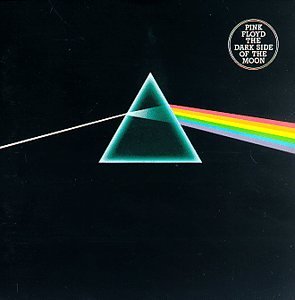
Replicating this with a forward path tracer turned out to be quite difficult though. Finding a path that actually carries light through a prism turned out to be really unlikely for a collimated beam of light, so I had to resort to a slightly blurred version like this:

A conical light beam seen through a refractive prism. This took almost 1 million samples per pixel and 8 hours to render, and is still visibly noisy.

A collimated light source interacting with two prisms.

A complex scene displaying caustics from multiple collimated light sources.

No comments:
Post a Comment